A brain tumor diagnosis is life-altering, and naturally, one of the first questions a patient or their family asks is: how much time does a brain tumor take to grow? The speed at which a tumor develops can dictate everything from the urgency of surgery to the long-term prognosis. Understanding the growth process is essential for making informed medical decisions. Whether a tumor develops over several years or manifests in just a few weeks depends on its grade, type, and origin. This guide provides a detailed look at the growth patterns of brain tumors and the medical steps required to manage them effectively.
What is a Brain Tumor?
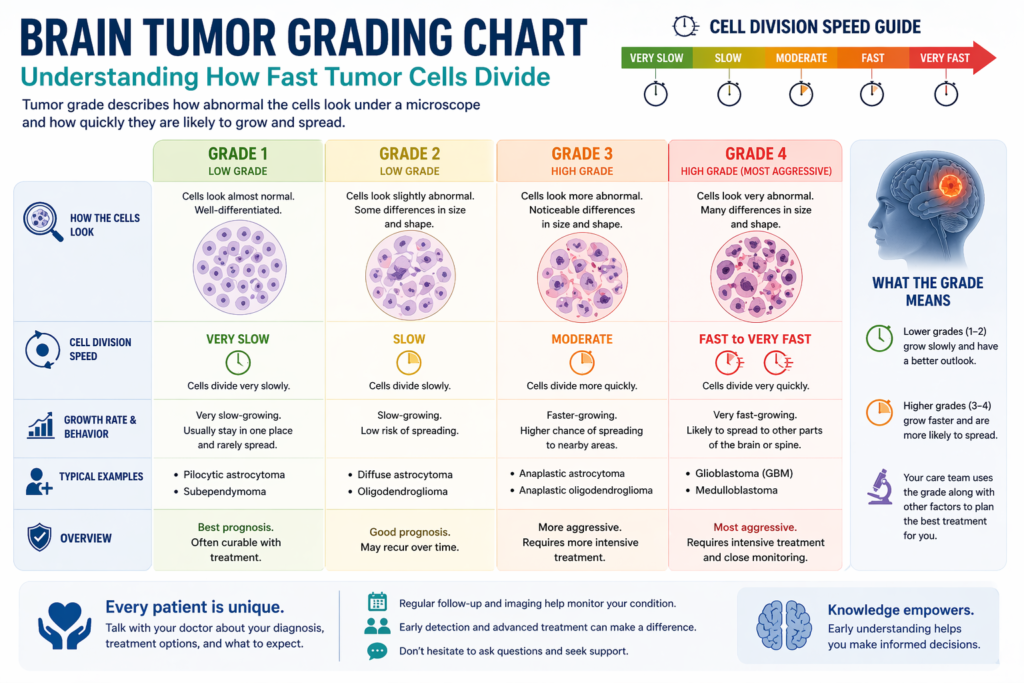
A brain tumor is an abnormal mass of cells within or surrounding the brain. These growths are categorized as either primary (starting in the brain) or secondary (spreading from other parts of the body, also known as metastases). The fundamental concern regarding how much time does a brain tumor take to grow lies in the “grade” of the tumor. The World Health Organization (WHO) classifies these tumors from Grade 1 (slow-growing and benign) to Grade 4 (highly aggressive and malignant). While some benign tumors remain dormant for decades, malignant ones can double in size in a matter of days.
Causes and Reasons for Brain Tumor Development
The exact trigger for why cells begin to divide uncontrollably in the brain is not always clear. However, several factors contribute to the growth process:
- Genetic Mutations: Changes in the DNA of brain cells can turn off the “stop” signal for cell division.
- Family History: Certain genetic syndromes like Neurofibromatosis can increase the risk.
- Radiation Exposure: Previous radiation therapy to the head is a known risk factor.
- Environmental Factors: While still under study, long-term exposure to certain industrial chemicals may play a role.
Understanding the Symptoms
As a tumor grows, it takes up space within the rigid skull, increasing intracranial pressure. Symptoms often depend on the tumor’s location rather than just the growth speed.
- Headaches: Often worse in the morning and potentially accompanied by vomiting.
- Seizures: Sudden onset of seizures in an adult is a major red flag.
- Cognitive Changes: Memory loss, personality shifts, or difficulty concentrating.
- Vision and Speech Issues: Blurred vision or slurring of words.
- Motor Weakness: Weakness on one side of the body, often confused with a stroke.
Diagnosis: Tracking the Growth
At Spine and Brain India, we utilize high-precision diagnostic tools to answer the question of growth.
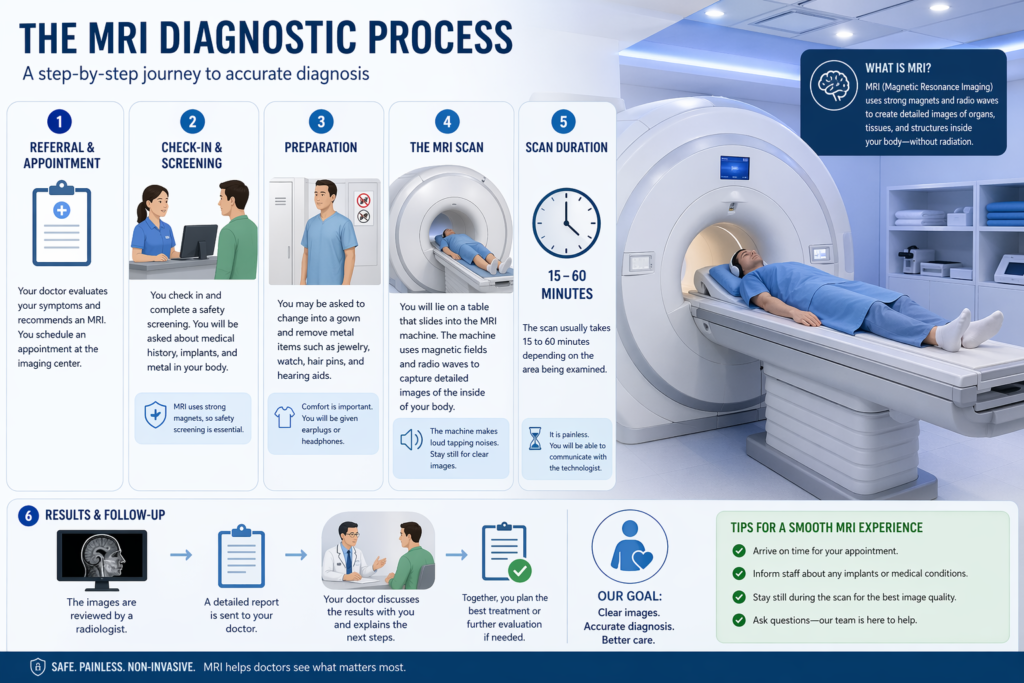
- MRI with Contrast: This is the gold standard. By using a special dye, MRI scans can show how “active” a tumor is based on how much blood it consumes.
- CT Scans: Useful for detecting calcified tumors or emergency bleeding.
- Biopsy: Taking a small tissue sample is the only way to definitively determine the grade and predict the growth rate.
- Functional MRI: Helps mapping the brain to see if the tumor is invading critical areas responsible for speech or movement.
Early Detection Saves Lives
“Don’t ignore these signs—get a professional diagnosis today.”
Schedule Your ConsultationConsult with the expert neuro-specialists at Spine and Brain India.
Factors Influencing: How Much Time Does a Brain Tumor Take to Grow?
The growth rate is primarily determined by the tumor’s biological makeup.
Low-Grade Tumors (Grades 1 & 2)
These are often slow-growing. A Meningioma, for example, might grow only 1–2 millimeters per year. Patients may have these for a decade before they cause enough symptoms to be noticed.
High-Grade Tumors (Grades 3 & 4)
Glioblastomas (GBM) are the fastest-growing. In these cases, the answer to how much time does a brain tumor take to grow can be measured in weeks. These tumors create their own blood vessels to fuel rapid expansion, often requiring emergency neurosurgery.
Comparison Table: Tumor Grades and Growth Rates
| Tumor Grade | Growth Velocity | Typical Cell Type | Management Approach |
|---|---|---|---|
| Grade 1 | Very Slow | Benign (e.g., Pilocytic Astrocytoma) | Observation or Surgery |
| Grade 2 | Slow to Moderate | Low-grade Glioma | Surgery and Monitoring |
| Grade 3 | Fast | Malignant (e.g., Anaplastic Glioma) | Surgery, Radiation, Chemo |
| Grade 4 | Extremely Fast | Highly Malignant (e.g., Glioblastoma) | Immediate Aggressive Therapy |
Treatment Options for Managing Growth
Once the growth rate is established, a neurology specialist will recommend a combination of therapies:
- Surgical Resection: The primary goal is to remove as much of the tumor as possible to relieve pressure.
- Radiation Therapy: Uses high-energy beams to kill tumor cells and stop them from dividing.
- Chemotherapy: Drugs like Temozolomide are used to interfere with the DNA of fast-growing cells.
- Targeted Therapy: Focuses on specific pathways that allow tumors to grow new blood vessels.
- Gamma Knife Radiosurgery: A non-invasive option for small or hard-to-reach tumors.
Risks and Side Effects of Treatment
Treating a fast-growing brain tumor is a balance of risks. Surgery carries risks of infection or neurological deficits, while radiation can cause fatigue and hair loss. However, at a specialized neurological center, advanced monitoring techniques are used to minimize damage to healthy brain tissue during the removal process.
Recovery and Prevention Tips
While you cannot “prevent” a brain tumor in the traditional sense, you can improve your recovery and monitor for changes:
- Regular Follow-ups: For slow-growing tumors, “watchful waiting” with annual MRIs is common.
- Healthy Lifestyle: Proper nutrition and sleep support the brain’s ability to recover from surgery or radiation.
- Rehabilitation: Post-surgery, many patients benefit from physiotherapy to regain motor skills and balance.
- Avoid Carcinogens: Minimize unnecessary exposure to radiation and toxic chemicals.
When to See a Doctor
If you or a loved one experiences a sudden, persistent headache that is different from your usual patterns, or if there is a sudden change in behavior or vision, do not wait. In the context of how much time does a brain tumor take to grow, early detection is the single most important factor in successful treatment. A quick consultation with a neurosurgeon can provide clarity and potentially save a life.
Conclusion
The growth of a brain tumor is a complex biological process that varies from person to person. While the question how much time does a brain tumor take to grow has different answers depending on the tumor grade, modern medicine offers powerful tools to slow down, stop, or remove these growths. At Spine and Brain India, we specialize in identifying these growth patterns early and providing world-class care to manage them. Take control of your neurological health. Book an appointment today for an expert evaluation and a customized care plan.
FAQ Section
Can a benign brain tumor become malignant over time?
Yes, some low-grade (Grade 2) tumors have the potential to evolve into higher-grade, faster-growing tumors over several years. This is why regular monitoring with MRI is essential even for non-cancerous growths.
How fast does a Grade 4 Glioblastoma grow?
Glioblastomas are highly aggressive. Without treatment, they can double in size in very short periods, sometimes as quickly as every few weeks, which is why immediate intervention is required.
Can stress cause a brain tumor to grow faster?
There is no direct clinical evidence that psychological stress causes brain tumors to grow faster. However, managing stress is vital for the overall health and immune function of a patient undergoing treatment.
Is a slow-growing brain tumor less dangerous?
Not necessarily. Even a slow-growing tumor can be dangerous if it is located in a critical area of the brain that controls breathing, heart rate, or motor function. Its location is often as important as its growth speed.
Can diet stop a brain tumor from growing?
While a healthy diet supports the body during treatment, no specific food or diet has been proven to stop a brain tumor from growing. Medical treatments like surgery and radiation remain the primary methods of control.
How often should I get an MRI to monitor tumor growth?
The frequency depends on the tumor grade. For slow-growing tumors, it might be every 6–12 months. For high-grade tumors, scans may be required every 2–3 months during and after treatment.
Start Your Healing Journey
“Book your consultation now and take the first step toward recovery.”
Book Appointment NowTrusted Care at Spine and Brain India