In an era where mental health awareness is at its peak, many people find themselves worrying about the physical toll of their thoughts. A frequent concern that surfaces in clinical discussions is: can overthinking cause brain tumors? With stress levels rising globally, it is natural to wonder if intense mental strain can trigger abnormal cell growth in the brain. However, distinguishing between psychological distress and neurological pathology is vital for peace of mind. This article dives deep into the medical reality of tumor development, debunks common myths, and explains why your thoughts—while powerful—do not physically create tumors.
What is a Brain Tumor?
A brain tumor is a collection, or mass, of abnormal cells in your brain. Your skull is very rigid, and any growth inside such a restricted space can cause significant problems. Tumors are classified as benign (noncancerous) or malignant (cancerous). While they interfere with brain function, their origin is rooted in genetic mutations and cellular malfunctions rather than cognitive patterns or emotional habits. When addressing the question, can overthinking cause brain tumors, medical science looks at cellular biology rather than thought volume.
Causes and Reasons for Brain Tumor Development
Brain tumors occur when specific genes on the chromosomes of a cell are damaged and no longer function properly. These genes normally tell the cell when to grow, divide, and die. Reasons for this damage include:
- Genetic Mutations: Random errors in cell division or inherited genetic syndromes.
- Environmental Exposure: Long-term exposure to high doses of ionizing radiation.
- Immune System Health: A severely compromised immune system may increase the risk of certain types like lymphomas.
- Age and Ethnicity: Certain types are more common in specific age groups and demographics.
- Note on Stress: While chronic stress affects the immune system, there is no direct evidence linking the act of overthinking to the mutation of brain cells.
Symptoms of Brain Tumors vs. Anxiety
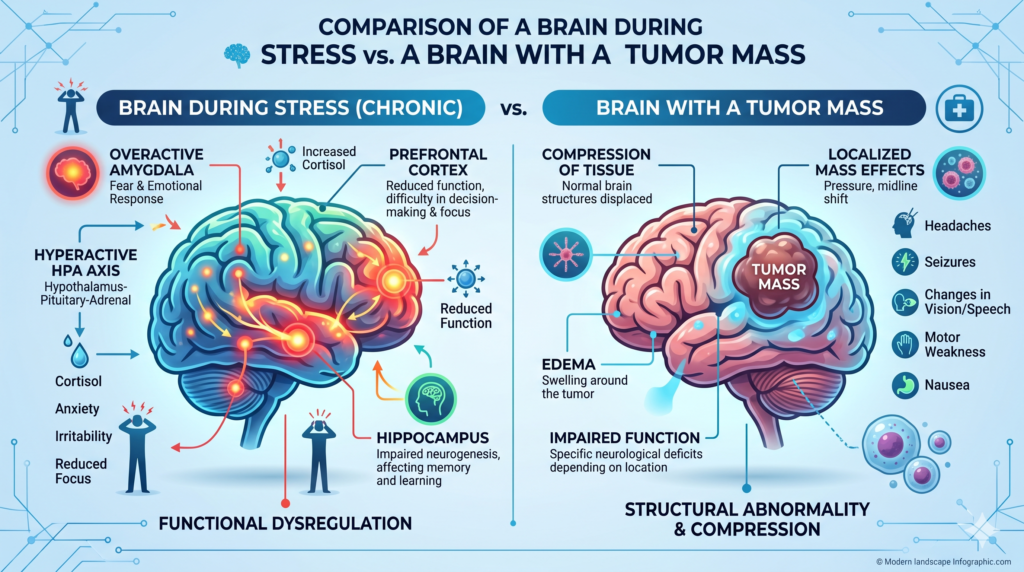
Part of the reason people ask can overthinking cause brain tumors is that the physical symptoms of anxiety and overthinking often mimic neurological issues.
- Anxiety Symptoms: Muscle tension, tension headaches, dizziness, and difficulty concentrating.
- Tumor Symptoms: Persistent “pressure” headaches (often worse in the morning), seizures, unexplained vomiting, and focal weakness on one side of the body.
- Cognitive Decline: Significant memory loss or personality changes that are distinct from the “brain fog” associated with overthinking.
Diagnosis: How Doctors Rule Out Concerns
If you are worried that your mental strain has caused a physical issue, a professional evaluation at Spine and Brain India can provide clarity.
- Neurological Exam: A neurology specialist checks your vision, hearing, balance, and reflexes to ensure the brain’s pathways are clear.
- MRI Scan: The most effective tool for ruling out a mass. Advanced MRI imaging provides a detailed look at brain tissue.
- CT Scan: Useful for a quick view of the brain in emergency situations.
- Biopsy: If a mass is found, a small tissue sample is taken to determine the exact nature of the cells.
Can Overthinking Cause Brain Tumors? Debunking the Myths
The short answer is no. Overthinking is a psychological habit, while a tumor is a biological growth.
Myth: Thinking too hard “overheats” the brain and causes cells to mutate.
Fact: The brain is designed to process complex thoughts constantly. Cognitive activity does not cause cellular damage or lead to cancer.
Myth: Stress from overthinking causes tumors.
Fact: Chronic stress can lead to high blood pressure or heart issues, but there is no clinical link to brain tumor formation.
Myth: “I can feel the tumor growing when I worry.”
Fact: The brain tissue itself does not have pain receptors. The pain from a tumor comes from pressure on nerves or blood vessels, which is consistent and not usually triggered by a specific thought.
Comparison Table: Overthinking vs. Neurological Symptoms
| Feature | Overthinking / Stress | Brain Tumor |
| Headache Type | Tension-like “band” around head | Deep, throbbing, pressure-related |
| Trigger | Specific stressful events or thoughts | Independent of mood or activity |
| Nausea | Occasional “butterfly” stomach | Frequent, often with projectile vomiting |
| Seizures | Extremely rare (unless underlying epilepsy) | A common primary symptom |
Treatment Options for Brain Tumors
Should a diagnosis occur, treatment is highly specialized and unrelated to mental habits:
- Surgery: The primary method to remove the mass. Our neurosurgery team uses precision technology to protect healthy tissue.
- Radiation Therapy: Using x-rays or protons to kill tumor cells.
- Chemotherapy: Drugs that stop the growth of cancer cells by killing them or stopping them from dividing.
- Targeted Therapy: Using substances to identify and attack specific cancer cells without harming normal cells.
Risks and Side Effects
Treating a tumor involves risks like neurological deficits or fatigue. Conversely, untreated overthinking carries the risk of chronic anxiety, depression, and a reduced quality of life. While overthinking doesn’t cause tumors, it does impact your neurological well-being, making it important to manage both your mental and physical health.
Recovery and Prevention Tips
Focusing on brain health can reduce anxiety about potential illnesses:
- Mindfulness and Meditation: To manage the habit of overthinking.
- Sleep Hygiene: Essential for the brain to clear out metabolic waste.
- Regular Exercise: Improves blood flow to the brain and reduces stress.
- Cognitive Behavioral Therapy (CBT): Highly effective for breaking the cycle of health-related anxiety.
- Routine Check-ups: If you have persistent symptoms, physiotherapy and neurological screenings can provide peace of mind.

When to See a Doctor
If your fear that can overthinking cause brain tumors is driven by physical sensations, see a doctor if:
- Your headaches are new, severe, or different in pattern.
- You experience a seizure for the first time.
- You have sudden changes in vision or speech.
- You feel persistent weakness or numbness in your limbs.
Conclusion
To restate the facts: can overthinking cause brain tumors? No. While overthinking is a difficult mental hurdle that affects your happiness, it does not possess the biological mechanism to create a brain tumor. However, health anxiety is real and can be just as debilitating as physical symptoms. If you are struggling with persistent fears or physical symptoms that you can’t explain, the best course of action is to seek an expert medical opinion rather than letting the cycle of overthinking continue.
Prioritize your mental and physical peace. Book an appointment with the specialists at Spine and Brain India to discuss your symptoms and get a professional, evidence-based evaluation.
FAQ Section
Can chronic stress lead to any type of cancer?
While chronic stress can weaken the immune system and lead to unhealthy behaviors (like smoking or poor diet) that increase cancer risk, there is no direct evidence that stress itself causes brain tumors or other cancers.
Why do I get a headache every time I overthink?
This is usually a tension headache. When you overthink or feel stressed, the muscles in your neck and scalp contract, creating a dull ache or pressure sensation.
Can an MRI detect the effects of overthinking?
A standard MRI looks at the structure of the brain and can detect tumors, but it cannot “see” overthinking. Functional MRIs (fMRI) can show areas of high brain activity, but they are not used for diagnosing psychological habits.
Is brain fog a sign of a tumor?
Brain fog is most commonly caused by stress, lack of sleep, or nutrition. While cognitive changes can occur with tumors, they are usually more severe and accompanied by physical neurological deficits.
How can I tell the difference between a stress headache and a tumor headache?
Stress headaches usually fluctuate with your mood and resolve with relaxation or over-the-counter pain meds. Tumor headaches are often persistent, worse in the morning, and may increase in severity regardless of your stress level.
What should I do if I can’t stop worrying about having a brain tumor?
This is often referred to as “Health Anxiety.” Consulting a neurology specialist for a baseline screening can help rule out physical issues, after which a mental health professional can help manage the overthinking.