Deciding to undergo spinal surgery is a significant step toward living a pain-free life. However, once the decision is made, the most common concern for patients is: how long does it take to recover from spine surgery? While the thought of a long rehabilitation period can be daunting, modern surgical techniques have made the process much smoother and faster than in previous decades. This guide provides a comprehensive breakdown of the recovery stages, what to expect during each phase, and how you can accelerate your journey back to full mobility.
What is Spine Surgery Recovery?
Spine surgery recovery is the period during which your body heals from the surgical intervention and your spine stabilizes. It isn’t just about the wound closing; it involves the nerves settling, muscles regaining strength, and, in cases like fusion, bones growing together. The answer to how long does it take to recover from spine surgery? varies significantly depending on the type of procedure performed—whether it was a minimally invasive discectomy or a complex spinal fusion.
Reasons for Spine Surgery
Surgery is typically recommended when conservative treatments like medication or physical therapy fail to provide relief. Common reasons include:
- Herniated Discs: Relieving pressure on spinal nerves.
- Spinal Stenosis: Narrowing of the spinal canal causing pain.
- Spondylolisthesis: When a vertebra slips out of place.
- Degenerative Disc Disease: Wear and tear causing chronic instability.
- Spinal Tumors or Trauma: Urgent surgical intervention to preserve nerve function.
Symptoms Requiring Surgical Intervention
Most patients consider surgery when their symptoms become debilitating. Look out for:
- Persistent radiating pain in the arms or legs (Sciatica).
- Numbness or tingling that interferes with daily tasks.
- Loss of bladder or bowel control (a medical emergency).
- Difficulty standing or walking for more than a few minutes.
- Muscle weakness that prevents normal movement.
Diagnosis and Preparation
Before surgery, a thorough evaluation is conducted at Spine and Brain India. This includes a clinical examination and advanced imaging such as X-rays and MRI scans to pinpoint the exact location of the spinal issue. Preparing for recovery starts before the operation by optimizing your nutrition, quitting smoking, and setting up a “recovery station” at home with easy access to essentials.
Understanding the Recovery Timeline
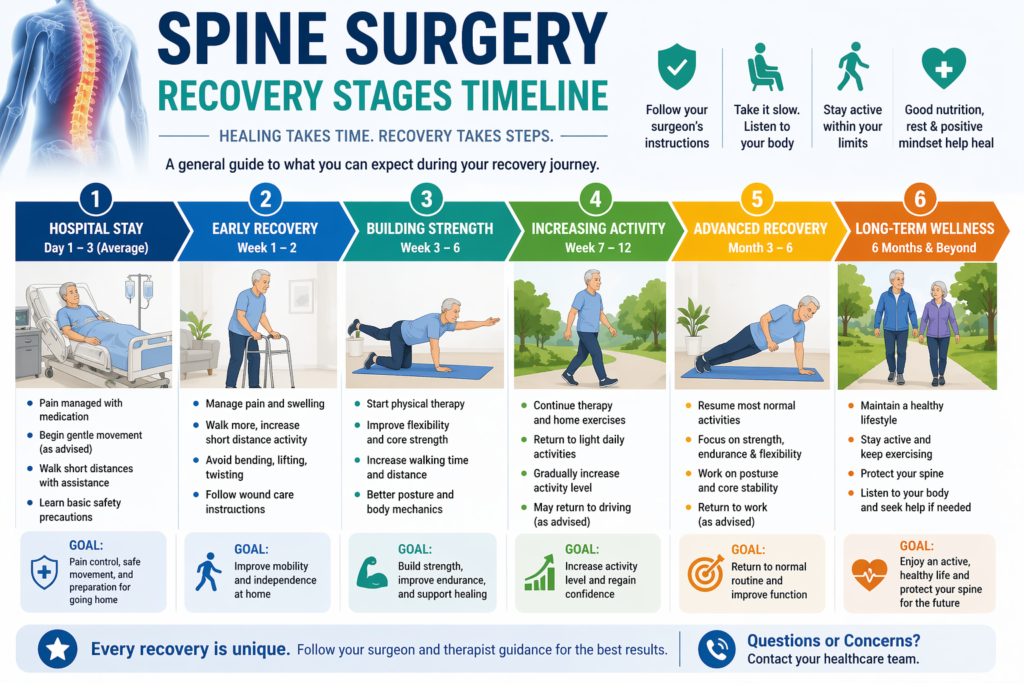
The timeline for healing is generally broken down into immediate, short-term, and long-term phases.
Phase 1: The Hospital Stay (Days 1–4)
Immediately after the procedure, the focus is on pain management and moving safely. Most patients are encouraged to walk within 24 hours of surgery to prevent blood clots. For minimally invasive procedures, you might even go home the same day.
Phase 2: Early Healing (Weeks 1–6)
During this stage, the surgical incision heals. You will need to follow strict “BLT” restrictions: No Bending, No Lifting (usually nothing heavier than a gallon of milk), and No Twisting. This is the most critical time for protecting the surgical site.
Phase 3: Active Rehabilitation (Months 1.5–6)
This is when specialized physical therapy begins. The goal shifts from protection to strengthening the core muscles that support the spine. Many patients return to sedentary office work during this phase.
Phase 4: Full Activity (6 Months to 1 Year)
For complex surgeries like fusion, it takes several months for the bone to fully solidify. By the one-year mark, most patients can return to strenuous activities, including sports, provided they have been cleared by their neurosurgery specialist.
Factors Influencing Recovery Time
| Procedure Type | Typical Recovery Window | Return to Work (Desk Job) |
|---|---|---|
| Microdiscectomy | 4–6 Weeks | 1–2 Weeks |
| Laminectomy | 6–12 Weeks | 2–4 Weeks |
| Spinal Fusion | 6–12 Months | 4–8 Weeks |
| Artificial Disc Replacement | 3–6 Months | 2–3 Weeks |
Risks and Potential Side Effects
While surgery is generally safe, it is important to be aware of potential risks during the recovery period:
- Infection: Redness or discharge at the incision site.
- Blood Clots: Often prevented by early walking and compression stockings.
- Nerve Irritation: Temporary numbness as nerves heal.
- Failed Back Surgery Syndrome: Persistent pain if the underlying issue isn’t fully resolved.
Recovery and Prevention Tips
To ensure you reach your goals in the predicted time for how long does it take to recover from spine surgery, follow these expert tips:
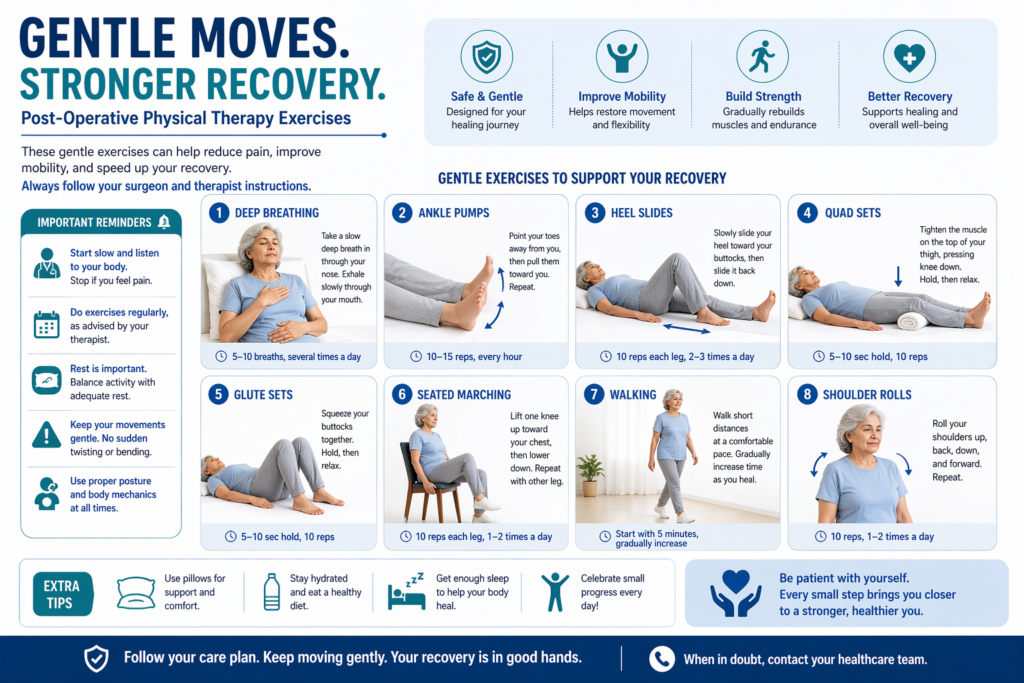
- Walk Regularly: It is the best exercise for spine patients as it promotes circulation without straining the back.
- Proper Ergonomics: Use a chair with good lumbar support and avoid slouching.
- Follow the Meds: Take pain medication as prescribed to stay ahead of the “pain curve.”
- Nutrition: Increase protein and Vitamin D intake to support bone and tissue repair.
- Listen to Your Body: If an activity causes sharp pain, stop immediately and consult your doctor.
When to See a Doctor Post-Surgery
Contact your surgical team at Spine and Brain India if you experience:
- Fever over 101°F.
- Sudden, severe increase in back or leg pain.
- New weakness in your feet or legs.
- Drainage or opening of the incision.
Conclusion
So, how long does it take to recover from spine surgery? For most, the journey to feeling “normal” again takes about 3 to 6 months, though bone healing continues for a year. The key to a successful outcome is patience and adherence to your rehabilitation plan. Modern neurological treatments are designed to get you back on your feet faster than ever before. If you are experiencing chronic back pain and want to explore your options, don’t wait for the condition to worsen. Start your journey to recovery today. Book a consultation with our expert spine surgeons to discuss a personalized treatment and recovery plan tailored to your lifestyle.
Take the First Step Toward a Pain-Free Life
Recovery starts with the right diagnosis. Consult our specialists at Spine and Brain India for a personalized treatment plan tailored to your needs.
Book Your Appointment NowExpert Care for Neurological and Spinal Conditions.
FAQ Section
How soon can I drive after spine surgery?
Most patients can return to driving within 2 to 4 weeks, provided they are no longer taking narcotic pain medications and can comfortably turn their body to check mirrors and blind spots.
Will I need a brace during my recovery?
This depends on the surgery. Spinal fusion patients often wear a brace for 6 to 12 weeks to keep the spine aligned while the bone heals, whereas discectomy patients usually do not need one.
Can I climb stairs when I get home from the hospital?
Yes, most patients are taught how to navigate stairs safely by a physical therapist before being discharged. It is best to take them one step at a time with a handrail.
Why does my pain feel worse a few days after surgery?
This is common as the local anesthesia wears off and the initial surgical inflammation peaks. This usually subsides within the first week with proper medication.
When can I start lifting heavy weights again?
Heavy lifting (over 10–15 lbs) is usually restricted for at least 12 weeks. For athletes or those in manual labor, it may take 6 months or longer to get full clearance.
Does smoking affect how long it takes to recover from spine surgery?
Yes, nicotine significantly slows down bone healing and increases the risk of “non-union” in fusion surgeries. Quitting smoking is one of the best things you can do for your recovery.