Receiving a brain tumor diagnosis is a life-altering moment that often brings a wave of fear and uncertainty. For many patients, the immediate thought is invasive brain surgery. However, modern medical advancements have opened doors to several effective alternatives. If you are looking for information on how to cure brain tumor without surgery, it is essential to understand that while “cure” depends on the tumor type, many non-invasive treatments can effectively manage, shrink, or eliminate tumors. At Spine and Brain India, we prioritize precision and patient comfort, offering cutting-edge non-surgical pathways for those who are not candidates for surgery or prefer less invasive options.
Understanding Brain Tumors and Non-Surgical Possibilities
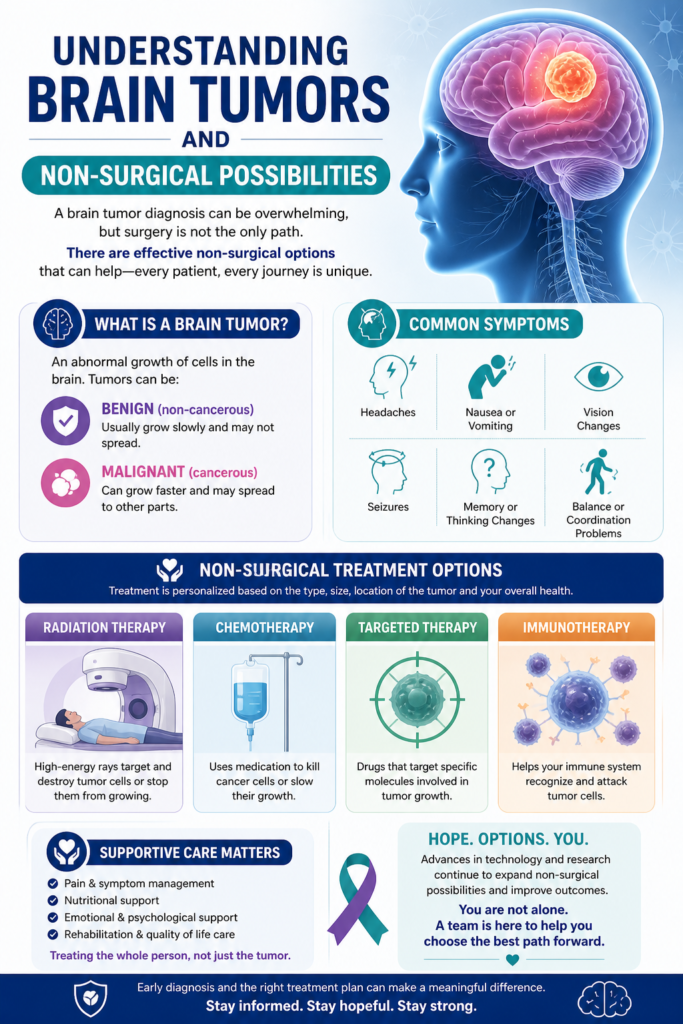
A brain tumor is an abnormal growth of cells within the skull. These are categorized into benign (non-cancerous) and malignant (cancerous). While surgery is a traditional primary approach, it isn’t always the safest or most viable option. Factors like the tumor’s location near vital structures, the patient’s overall health, or the specific type of tumor cells dictate the treatment plan.
Non-surgical treatments focus on destroying tumor cells or inhibiting their growth using high-energy beams, chemical agents, or biological markers. These methods aim to preserve healthy brain tissue and reduce the recovery time associated with traditional craniotomies.
Common Causes and Risk Factors
The exact cause of most brain tumors remains a subject of ongoing research. However, several factors increase the likelihood of development:
- Genetic Predisposition: Conditions like Neurofibromatosis or Li-Fraumeni syndrome.
- Radiation Exposure: Previous exposure to ionizing radiation, especially during childhood.
- Age: While they can occur at any age, certain types are more common in older adults.
- Immune System Issues: A weakened immune system can increase the risk of primary central nervous system lymphomas.
Explore Your Non-Surgical Treatment Options
Get a personalized consultation with India’s leading neuro-specialists to discuss the best path forward for your health.
Book Your Consultation NowSymptoms That Require Attention
Symptoms vary based on the tumor’s size and location. Early detection is key to the success of non-surgical interventions. Watch for:
- Persistent, worsening headaches (especially in the morning).
- Seizures in someone without a history of epilepsy.
- Gradual loss of sensation or movement in an arm or leg.
- Difficulty with balance or speech.
- Vision changes, such as blurred or double vision.
- Cognitive decline or personality changes.
Diagnosis: The First Step Toward Treatment
Before deciding how to cure brain tumor without surgery, a precise diagnosis is mandatory. Diagnostic tools include:
- Neurological Exam: Checking vision, hearing, balance, and reflexes.
- MRI (Magnetic Resonance Imaging): The gold standard for visualizing brain structures. Functional MRI and MR spectroscopy provide deeper insights into blood flow and chemical makeup.
- CT Scan: Useful for detecting bone involvement or calcification.
- PET Scan: Helps differentiate between active tumor cells and scar tissue.
- Biopsy: While sometimes surgical, stereotactic needle biopsies are minimally invasive and crucial for determining the tumor’s molecular profile.
How to Cure Brain Tumor Without Surgery: Primary Treatment Options
For patients seeking non-surgical routes, several high-tech therapies are available. These treatments can be used alone or in combination.
1. Stereotactic Radiosurgery (SRS)
Despite the name, this is not surgery. It is a highly precise form of radiation therapy. Systems like Gamma Knife or CyberKnife deliver a single, high dose of radiation precisely to the tumor, sparing the surrounding healthy tissue. It is an excellent option for deep-seated tumors that are difficult to reach via traditional means.
2. External Beam Radiation Therapy (EBRT)
EBRT uses a machine to direct high-energy beams (X-rays or protons) at the tumor from outside the body. This is typically done over several weeks in small daily doses. This method is often used for malignant brain tumors that have infiltrated surrounding tissue.
3. Chemotherapy
Chemotherapy uses drugs to kill tumor cells. While the “blood-brain barrier” makes it difficult for some drugs to reach the brain, specific oral medications like Temozolomide are highly effective, especially for gliomas.
4. Targeted Therapy
This is a newer frontier in neuro-oncology. Unlike chemotherapy, which affects all fast-growing cells, targeted therapy focuses on specific abnormalities within the cancer cells. By blocking these signals, the tumor stops growing and spreading.
5. Tumor Treating Fields (TTFields)
This non-invasive therapy involves wearing a device on the head that creates an electric field. This field disrupts the division of cancer cells, slowing tumor progression. It is often used for aggressive glioblastomas.
Comparison of Non-Surgical Treatments
| Treatment Type | Mechanism | Duration | Best For |
| Radiosurgery | High-dose radiation beams | 1 Session | Small, well-defined tumors |
| Chemotherapy | Chemical drugs | Cycles (Months) | Malignant/recurrent tumors |
| TTFields | Electric fields | Ongoing daily wear | Glioblastoma |
| Targeted Therapy | Molecular inhibitors | Long-term | Specific genetic mutations |
Risks and Side Effects
While non-surgical treatments avoid the risks of infection and anesthesia associated with surgery, they carry their own set of side effects:
- Radiation: Fatigue, skin irritation, and “brain fog.”
- Chemotherapy: Nausea, weakened immune system, and hair loss.
- Steroid Use: Often prescribed to reduce brain swelling, steroids can cause weight gain or mood swings.Most side effects are manageable with supportive care and disappear after the treatment course ends.
Recovery and Long-term Management
Recovery from non-surgical treatment is generally faster than surgical recovery. Patients are encouraged to:
- Maintain a nutrient-rich diet to support the immune system.
- Engage in light physical activity as tolerated.
- Attend regular follow-up neurological consultations to monitor for recurrence.
- Prioritize mental health support through counseling or support groups.
When to See a Doctor
If you experience a sudden, severe “thunderclap” headache, new-onset seizures, or sudden weakness on one side of the body, seek emergency medical attention. For persistent but gradual symptoms, consult a neurosurgeon in Delhi for a comprehensive evaluation. Early intervention significantly improves the outlook for non-surgical success.
Finding the right path for how to cure brain tumor without surgery requires an expert multidisciplinary team. At Spine and Brain India, we utilize advanced brain tumor diagnostic tools and personalized treatment plans to ensure the best possible outcomes for our patients.
Ready to speak with a specialist?
Every brain tumor case is unique. Find out if non-surgical treatments are right for you through a comprehensive evaluation.
Consult a Specialist Today →Conclusion
While surgery remains a powerful tool, it is no longer the only way to combat brain tumors. Through the precision of Radiosurgery, the targeted approach of modern pharmaceuticals, and the innovation of electric field therapy, patients have more choices than ever before. Understanding your options is the first step toward recovery and maintaining a high quality of life.
Frequently Asked Questions (FAQs)
Q1: Can all brain tumors be treated without surgery?
No, it depends on the tumor’s size, type, and location. Some tumors cause dangerous pressure that only surgery can relieve quickly. However, many benign and even some malignant tumors respond well to non-surgical methods.
Q2: Is Radiosurgery painful?
No, Stereotactic Radiosurgery is a painless, outpatient procedure. You remain awake during the treatment, and there are no incisions involved.
Q3: How successful is non-surgical treatment for brain tumors?
Success rates vary. For certain types of benign tumors, radiosurgery has a control rate of over 90%. For malignant tumors, non-surgical options are often used to prolong life and maintain quality of life.
Q4: How long does it take to see results from non-surgical treatment?
Unlike surgery, where the tumor is removed instantly, non-surgical treatments work over time. It may take weeks or months of monitoring through MRI scans to see the tumor shrink or stabilize.
Q5: Are there natural ways to cure a brain tumor?
While a healthy lifestyle and diet support the body during treatment, there is no scientific evidence that natural remedies alone can cure a brain tumor. They should only be used as complementary therapies alongside medical brain treatments.
Q6: Can a brain tumor come back after non-surgical treatment?
Yes, recurrence is possible with any cancer treatment. This is why long-term follow-up and regular imaging are essential parts of the recovery process.
Take the First Step Toward Recovery
Contact Spine and Brain India for advanced, non-invasive neuro-care.
Get in Touch