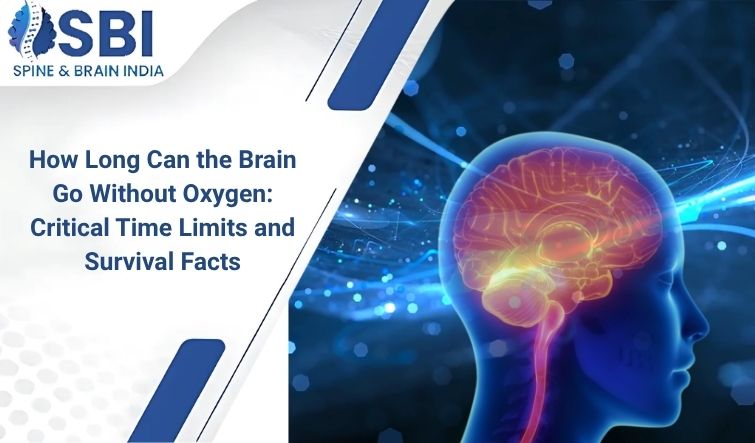
How Long Can the Brain Go Without Oxygen: Critical Time Limits and Survival Facts
The human brain is the most oxygen-hungry organ in the body. While it makes up only about 2% of our body weight, it consumes nearly 20% of our total oxygen supply. This extreme dependence means that when oxygen supply is cut off, the consequences are immediate and severe. One of the most important questions in emergency medicine is: how long can the brain go without oxygen before permanent damage or death occurs?
In this article, Dr. Arun Saroha — senior neurosurgeon at Spine and Brain India — explains the critical time limits, what happens to the brain at each stage of oxygen deprivation, and what can be done to prevent irreversible brain damage.
Why Does the Brain Need Oxygen So Urgently?
The brain uses oxygen to produce energy (ATP) through a process called cellular respiration. Without oxygen, neurons (brain cells) cannot produce the energy they need to function. Unlike other cells in the body, brain neurons have virtually no backup energy reserve. This is why the brain is so uniquely vulnerable to oxygen deprivation — a condition called cerebral hypoxia (partial oxygen reduction) or cerebral anoxia (complete oxygen cutoff).
Conditions that can cut oxygen to the brain include cardiac arrest, choking, drowning, stroke, severe head injury, carbon monoxide poisoning, and complications during surgery.
How Long Can the Brain Go Without Oxygen? A Second-by-Second Breakdown
The timeline of brain oxygen deprivation is precise and unforgiving. Here is what happens at each stage:
0–10 Seconds: Rapid Loss of Consciousness
Within just 10 seconds of complete oxygen cutoff, the brain starts failing. The person loses consciousness almost immediately. This is why people who suffer sudden cardiac arrest collapse so quickly — the brain simply powers off.
10–20 Seconds: Electrical Activity Stops
EEG studies show that brain electrical activity (the brain’s “signals”) begins to flatline within 10–20 seconds of oxygen loss. The brain is no longer processing information or controlling body functions during this window.
1–3 Minutes: Brain Cells Begin to Die
After approximately one to three minutes without oxygen, irreversible brain cell death begins. The neurons in the most sensitive areas — particularly the hippocampus (memory center) and the cerebral cortex — start to die first.
3–5 Minutes: Serious and Potentially Permanent Brain Damage
By the 3–5 minute mark, serious hypoxic brain injury is underway. This is the critical window. If CPR or other resuscitation begins before this point, survival with minimal damage is possible. This is why bystander CPR is so crucial.
At Spine and Brain India, our neurosurgery team regularly treats patients who suffered oxygen deprivation-related brain injuries. The extent of recovery depends almost entirely on how fast oxygen was restored.
5–10 Minutes: Severe Brain Damage and Death of Large Brain Areas
If oxygen is not restored by the 5–10 minute mark, widespread neuronal death occurs. The patient is likely to survive only with significant permanent neurological disability — including vegetative state, severe cognitive impairment, or motor paralysis.
Beyond 10 Minutes: Brain Death is Likely
After 10 minutes without oxygen, brain death becomes a very real possibility. Brain death means the complete and irreversible cessation of all brain function, including the brainstem which controls breathing and heartbeat. It is the legal and medical definition of death in most countries, including India.
What Is Hypoxic-Ischemic Brain Injury?
When oxygen deprivation is combined with lack of blood flow (ischemia), the condition is called hypoxic-ischemic encephalopathy (HIE). This is the most common type of brain injury from oxygen loss and occurs in:
- Cardiac arrest survivors
- Near-drowning victims
- Newborns during complicated deliveries (neonatal HIE)
- Patients after prolonged low blood pressure
Factors That Affect How Long the Brain Can Survive Without Oxygen
The “standard” 4–6 minute window is an average. Several factors can extend or shorten survival time:
Body Temperature
Cold temperatures significantly slow brain metabolism, which is why people who have drowned in cold water have sometimes been successfully resuscitated after 30–40 minutes with minimal brain damage. This is the scientific basis for therapeutic hypothermia — a treatment used in ICUs to cool the brain after cardiac arrest to reduce damage.
Age
Children have more neuroplasticity (brain adaptability) than adults, which means they may recover better after oxygen deprivation. However, infants are also extremely sensitive to HIE.
Pre-existing Health Conditions
People with diabetes, high blood pressure, or previous stroke damage have less tolerance for oxygen deprivation than healthy individuals.
Speed of Resuscitation
This is the most critical factor. For every minute without CPR during cardiac arrest, the chance of survival decreases by 7–10%. Starting CPR and using an AED (Automated External Defibrillator) within 2–4 minutes dramatically increases survival and brain function outcomes.
What Happens to the Brain After Oxygen Is Restored?
Ironically, restoring oxygen after deprivation can cause additional damage — a process called reperfusion injury. When oxygen suddenly rushes back into oxygen-starved cells, it triggers a release of toxic free radicals that can kill more neurons. This is why ICU treatment after cardiac arrest focuses on carefully controlled oxygen levels, not maximum oxygen delivery.
Recovery from hypoxic brain injury can include:
- Memory loss (especially short-term memory)
- Cognitive slowing or confusion
- Motor weakness or coordination problems
- Personality changes
- Seizures
- In severe cases: vegetative or minimally conscious state
Learn more about brain injury recovery options at our neurology and neurosurgery center.
What Is the Treatment for Oxygen Deprivation to the Brain?
Emergency treatment aims to restore oxygen as quickly as possible and minimize secondary damage:
- CPR (Cardiopulmonary Resuscitation) – Restores blood flow and oxygen delivery
- Defibrillation (AED) – Restores normal heart rhythm
- Mechanical Ventilation – Controls oxygen levels in the ICU
- Therapeutic Hypothermia – Cooling the brain to reduce cell death
- Anti-seizure Medications – Prevent secondary brain damage from seizures
- Rehabilitation – Occupational, speech, and physical therapy to maximize recovery
For specialized brain injury evaluation and care in India, consult Dr. Arun Saroha’s team at Spine and Brain India.
CPR Knowledge in India: Why It Matters
In India, out-of-hospital cardiac arrest survival rates remain extremely low — largely because most bystanders don’t know CPR. With 4–6 minutes being the window between life and brain death, every second matters. Organizations across India are now training people in basic CPR skills. Knowing how to perform CPR is one of the most life-saving skills any Indian can learn.
Frequently Asked Questions (FAQs)
Q1. How long can the brain go without oxygen before brain death?
In most cases, brain death begins to occur after 10 minutes of complete oxygen deprivation. However, severe, irreversible brain damage can begin in as little as 3–5 minutes. The exact timeline varies with age, body temperature, and other health factors.
Q2. Can the brain recover after oxygen deprivation?
Recovery is possible if oxygen is restored quickly (within 3–4 minutes) and intensive care is provided. The brain has some ability to reorganize (neuroplasticity), but the extent of recovery depends on the severity and duration of the hypoxia.
Q3. What happens if the brain is deprived of oxygen for 1 minute?
After 1 minute, the person will be unconscious and not breathing normally. Brain cells in the most sensitive areas begin to experience stress, but irreversible damage has not yet occurred for most people at this stage.
Q4. What is anoxic brain injury?
Anoxic brain injury occurs when the brain receives absolutely no oxygen, causing widespread cell death. It differs from hypoxic brain injury, where reduced (but not zero) oxygen reaches the brain.
Q5. How is hypoxic brain injury treated in India?
Treatment includes emergency resuscitation (CPR, AED), ICU monitoring, therapeutic hypothermia, controlled ventilation, seizure management, and long-term neurological rehabilitation. Specialized centers like Spine and Brain India offer comprehensive brain injury care.
Q6. Does cold water drowning give the brain more time?
Yes. Cold water significantly reduces the brain’s metabolic rate, which can extend the window for survival without permanent damage. Cases of successful resuscitation after 30+ minutes in cold water have been documented, though these are rare exceptions.
Conclusion
Understanding how long the brain can go without oxygen is not just medical knowledge — it’s life-saving knowledge for every Indian. The critical window is 4–6 minutes. Beyond that, permanent brain damage becomes increasingly likely. CPR, fast emergency response, and expert neurological care are the three pillars that determine whether a person survives with their brain intact.
If you or someone you know has experienced a brain injury due to oxygen deprivation, or if you want to understand your risk of brain-related emergencies, reach out to India’s expert neurosurgical team today.
🧠 Concerned About Brain Injury or Neurological Emergencies?
Get expert consultation from Dr. Arun Saroha — India’s leading neurosurgeon. Fast diagnosis. Advanced treatment. Compassionate care.
Book Your Consultation Now →