Cervical spondylosis affects millions of people worldwide, particularly those over 40 years of age. This degenerative condition involves the wear and tear of cartilage and bones in the neck region of the spine. Understanding what should be avoided in cervical spondylosis is crucial for managing symptoms effectively and preventing further deterioration of this progressive condition.

Understanding Cervical Spondylosis
Cervical spondylosis occurs when the spinal discs in your neck begin to deteriorate with age. The condition can cause neck pain, stiffness, and, in severe cases, nerve compression leading to arm pain and weakness. While aging is the primary cause, certain lifestyle factors and activities can worsen the condition significantly. The degenerative process affects not only the intervertebral discs but also the facet joints, ligaments, and surrounding soft tissues, creating a complex interplay of symptoms that can dramatically impact daily functioning and quality of life. For comprehensive evaluation and treatment, consulting the best neurosurgeon in Delhi can provide specialized care recommendations.
Key Things to Avoid in Cervical Spondylosis
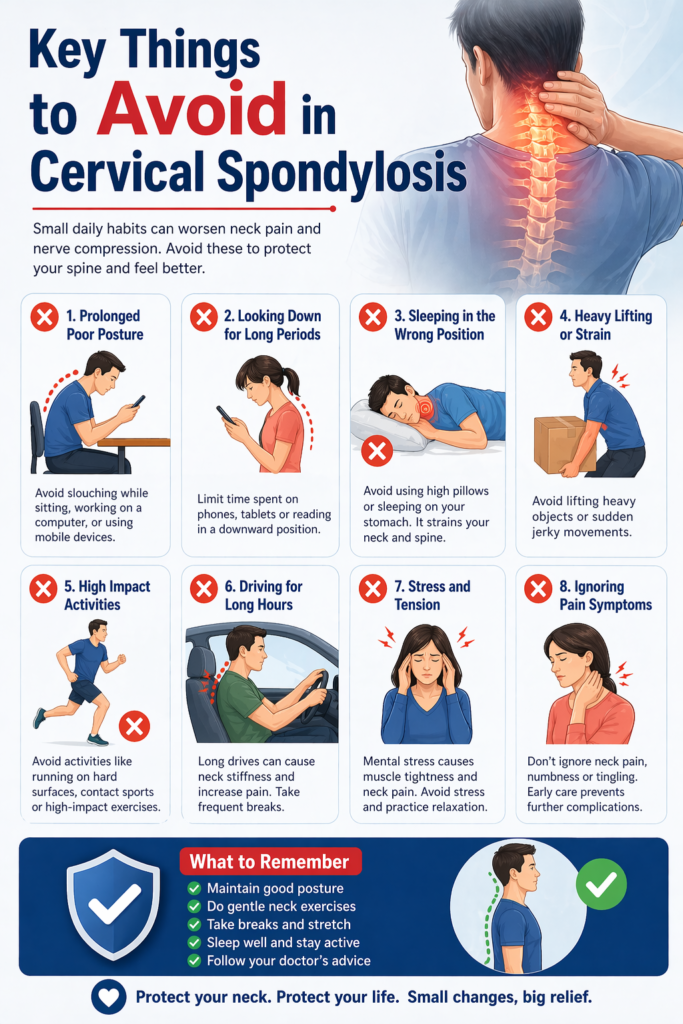
Poor Posture Habits
One of the most important aspects of what should be avoided in cervical spondylosis is maintaining poor posture throughout daily activities. Modern lifestyle patterns have created an epidemic of postural problems that directly contribute to cervical spine deterioration. The forward head posture, commonly seen in office workers and frequent device users, places excessive strain on the cervical vertebrae and accelerates the degenerative process.
Common postural mistakes that worsen cervical spondylosis include
- Slouching while sitting for extended periods
- Hunching over computers or mobile devices
- Maintaining forward head posture during work
- Sleeping with improper neck alignment
This chronic postural stress increases pressure on the neck vertebrae by up to 60 pounds when the head is positioned just two inches forward, making postural correction essential for symptom management.
Heavy Lifting and Sudden Movements
Patients often wonder what should be avoided in cervical spondylosis regarding physical activities and movement patterns. Heavy lifting, especially overhead activities, should be strictly avoided as they place tremendous stress on an already compromised cervical spine. The sudden loading of weight can cause acute disc herniation or worsen existing nerve compression.
Dangerous activities include
- Heavy overhead lifting or carrying
- Sudden jerky movements or rapid head turns
- Activities involving potential neck trauma
- Whiplash-type motions during sports
These movements can cause immediate injury to degenerative cervical structures, potentially leading to nerve damage, increased pain, and the need for more aggressive treatment interventions. In severe cases, advanced cervical spine surgery in India may be required to address structural damage.
Sleeping Positions and Sleep Hygiene
Your sleeping position plays a crucial role in cervical spondylosis management, as you spend approximately one-third of your life in this position. Sleeping on your stomach forces your neck into an unnatural twisted position for hours, placing sustained stress on cervical joints and muscles. This position also restricts proper breathing and can lead to morning stiffness and increased pain levels.
Poor sleep practices that should be avoided:
- Sleeping on stomach with head turned to one side
- Using too many pillows or very flat pillows
- Sleeping on couches or recliners regularly
Proper sleep positioning maintains the natural cervical curve and allows for tissue recovery during rest periods.
Lifestyle Factors That Worsen Cervical Spondylosis
Smoking and Tobacco Use
Understanding what should be avoided in cervical spondylosis must include recognizing smoking’s devastating effects on spinal health. Smoking significantly impacts spinal health by reducing blood flow to spinal discs and slowing the healing process. Nicotine constricts blood vessels, limiting nutrient delivery to spinal structures and impairing the body’s natural repair mechanisms. The reduced oxygen supply accelerates disc degeneration, making smoking cessation one of the most important lifestyle changes for cervical spondylosis patients.
Research demonstrates that smokers experience faster progression of cervical spondylosis and significantly poorer treatment outcomes compared to non-smokers. The toxic chemicals in tobacco also increase inflammatory markers throughout the body, contributing to chronic pain and delayed healing processes.
Weight Management and Physical Conditioning
Carrying excess weight puts additional strain on your entire spine, including the cervical region. The extra weight affects your posture and increases the mechanical stress on spinal structures while also contributing to chronic inflammatory states that worsen degenerative processes. Maintaining a healthy weight through proper diet and exercise reduces cervical spine stress and improves overall treatment outcomes. For comprehensive spinal care addressing weight-related back issues, back pain treatment in India offers specialized programs.
Stress and Psychological Factors
Chronic stress leads to muscle tension, particularly in the neck and shoulder region. This constant muscle tension can worsen cervical spondylosis symptoms and create a cycle of pain and stiffness. Psychological stress triggers the release of stress hormones like cortisol, which can increase inflammation and muscle tension throughout the body, directly impacting cervical spine health and symptom severity. For patients experiencing chronic tension headaches, specialized headache treatment in India can address these secondary symptoms.
Dietary and Nutritional Considerations
Foods to Avoid
Understanding what should be avoided in cervical spondylosis extends to dietary choices that can influence inflammation levels and healing capacity. Inflammatory foods such as processed foods, excessive sugar, trans fats, and refined carbohydrates can increase inflammation throughout the body, including the spine. These foods contribute to systemic inflammation that can worsen cervical spondylosis symptoms and slow the natural healing process.
Hydration and Nutritional Support
Maintaining proper hydration is essential for spinal disc health, as spinal discs are largely composed of water. Dehydration can accelerate disc degeneration and reduce the spine’s ability to absorb shock and maintain proper spacing between vertebrae. Adequate hydration supports nutrient delivery to spinal structures and helps remove metabolic waste products that can contribute to inflammation. When disc damage becomes severe, advanced treatments like degenerative disc disease treatment in India may be necessary.
Work-Related Precautions
Ergonomic Considerations
Poor workplace ergonomics is a significant factor in what should be avoided in cervical spondylosis. Working with computer screens at the wrong height, using unsupportive chairs, or having inadequate lighting that causes neck strain should be corrected immediately. These ergonomic issues create sustained postural stress that can accelerate degenerative changes and worsen existing symptoms. For those experiencing spinal narrowing due to poor posture, spinal stenosis surgery in India provides advanced treatment options.
Jobs requiring repetitive neck movements or prolonged looking up or down can aggravate cervical spondylosis. If your work involves such activities, implementing frequent breaks and position changes becomes essential for preventing symptom progression. Residents in the NCR region can consult with the best neurosurgeon in Gurgaon for workplace-specific ergonomic recommendations.
Summary Table: Critical Avoidance Strategies
| Category | Things to Avoid | Why Avoid | Potential Consequences |
| Posture | Forward head posture, slouching | Increases cervical pressure by 60+ lbs | Accelerated degeneration, chronic pain |
| Activities | Heavy lifting, sudden movements | Risk of acute disc injury | Nerve damage, surgical intervention |
| Sleep | Stomach sleeping, poor pillow support | Sustained cervical stress overnight | Morning stiffness, increased symptoms |
| Lifestyle | Smoking, excess weight, stress | Reduces healing, increases inflammation | Faster progression, poor outcomes |
| Diet | Processed foods, dehydration | Systemic inflammation, poor tissue health | Increased pain, slower recovery |
| Work | Poor ergonomics, static positions | Repetitive stress, muscle imbalances | Progressive symptoms, disability |
Treatment Approaches and Professional Care
When seeking the best treatment for cervical spondylosis in India, it’s important to work with experienced spine specialists who understand the complexity of this condition. The best treatment for cervical spondylosis in India typically involves a comprehensive approach combining conservative management, physical therapy, and, when necessary, advanced interventional procedures.
The Best Treatment Cervical Spondylosis In India, it often includes a multidisciplinary team approach, ensuring patients receive personalized care based on their specific condition severity and symptoms. Modern treatment protocols emphasize early intervention, patient education, and evidence-based therapeutic approaches. For complex cases involving spinal deformity, specialized scoliosis treatment in India may also be required.
Prevention Strategies and Healthy Habits
Exercise and Strengthening
While knowing what should be avoided in cervical spondylosis is important, incorporating appropriate exercises is equally crucial. Gentle neck stretches, strengthening exercises for neck and shoulder muscles, and maintaining overall fitness can help manage symptoms. The key is selecting exercises that strengthen supporting muscles without placing excessive stress on the cervical spine. For patients requiring surgical intervention, modern disc replacement surgery in India offers alternatives to traditional fusion procedures.
Daily Management Strategies
Taking frequent breaks from static positions, performing neck exercises throughout the day, and maintaining an active lifestyle within safe limits can prevent symptom progression. Implementing proper ergonomic principles at work and home creates an environment that supports cervical spine health. For residents seeking expert care, consulting a neurosurgeon in Noida ensures access to specialized treatment.
When to Seek Professional Help
Warning Signs
Certain symptoms require immediate medical attention and should never be ignored. These include severe neck pain following injury, numbness or weakness in arms or hands, severe headaches, or any signs of nerve compression. Understanding what should be avoided in cervical spondylosis also means avoiding delayed treatment when serious symptoms develop.
Choosing the Right Specialist
Early intervention by qualified spine specialists can prevent complications and improve long-term outcomes. Selecting healthcare providers with specific expertise in cervical spine disorders ensures access to the most current and effective treatment approaches.
Expert Medical Guidance
When dealing with cervical spondylosis, seeking expert medical guidance is crucial for optimal outcomes. Dr. Arun Saroha, with his extensive experience in spine surgery and neurosurgical procedures, provides comprehensive care that addresses both the immediate symptoms and long-term management of cervical spondylosis. His approach emphasizes patient education, conservative treatment options, and surgical intervention when necessary.
For patients requiring specialized intervention, Dr. Arun Saroha offers state-of-the-art treatment facilities and personalized care plans. His expertise in minimally invasive spine surgery and advanced neurosurgical techniques ensures that patients receive the most appropriate treatment for their specific condition, leading to better recovery outcomes and improved quality of life.
Conclusion
Understanding what should be avoided in cervical spondylosis is fundamental to managing this condition effectively. By avoiding poor posture, heavy lifting, inappropriate sleeping positions, high-impact activities, and inflammatory lifestyle factors, patients can significantly improve their quality of life and prevent further spinal deterioration.
Remember that cervical spondylosis management is not just about avoiding harmful activities but also about adopting healthy habits, seeking appropriate medical care, and following a comprehensive treatment approach. With proper care and attention to these guidelines, most people with cervical spondylosis can lead active, comfortable lives while effectively managing their condition.
FAQs
What are the main things to avoid in cervical spondylosis?
The main things to avoid include poor posture like forward head posture and slouching, heavy lifting and sudden neck movements, sleeping on the stomach or with poor pillow support, smoking and excessive weight, processed foods and dehydration, and poor workplace ergonomics.
Why is poor posture harmful for cervical spondylosis?
Poor posture, especially forward head posture, increases pressure on the cervical vertebrae by more than 60 pounds, accelerating degeneration and causing chronic pain. Maintaining correct posture is essential to manage symptoms effectively.
How does smoking affect cervical spondylosis?
Smoking reduces blood flow to spinal discs, slows healing, and increases inflammation. This leads to faster progression of cervical spondylosis and poorer treatment outcomes, making smoking cessation critical for patients.
When should I seek professional help for cervical spondylosis?
Seek immediate medical attention if you experience severe neck pain after injury, numbness or weakness in the arms or hands, severe headaches, or signs of nerve compression. Early intervention with a spine specialist improves long-term outcomes.
🧠 Consult India’s Leading Brain & Spine Expert
Dr. Arun Saroha is a top neurosurgeon with 20+ years of experience treating complex brain and spine conditions. Get personalised guidance for your health concern today.
📅 Book Your Consultation NowFree initial consultation available · Serving patients across India